Her Life
More than two thousand years ago, Xin Zhui lived in the world of the Western Han Dynasty. Although little of her everyday life was recorded in words, the objects buried with her preserve fragments of the world she once knew. Delicate silk garments reveal the sophistication of Han textile craftsmanship; lacquerware points to the objects used around the household and at the table, beliefs and practical concerns. Together, these objects allow us to look beyond the tomb and imagine the material world surrounding a woman of her time — what she wore, what she ate, what she listened to, and what people believed about life after death.
A glimpse into life 2000 years ago
Clothing
What did she wear?
Clothing found in the tomb reveals the materials, colors and craftsmanship of the Han period.
EXPLORE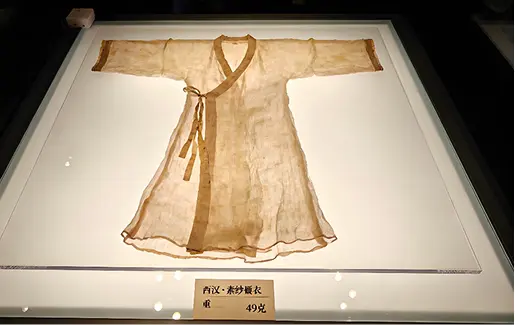
The clothing found in Xin Zhui’s tomb offers a glimpse into the refinement of Western Han textile culture. Among the most famous is the plain unlined gauze gown, woven from extremely fine silk threads and weighing only around 49 grams for the straight-front version. Its almost weightless fabric demonstrates the remarkable skill of Han silk production. Other garments found at Mawangdui include printed and painted textiles, embroidered fabrics and padded robes, showing that clothing was not simply practical, but also carried patterns, craftsmanship and social meaning.
Food
What did she EAT?
Food records and tableware from Mawangdui offer a glimpse into what people ate and how food was prepared.
EXPLORE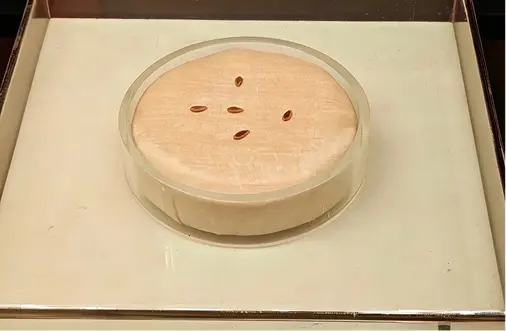
Food was also part of the world preserved at Mawangdui. Lacquered vessels, trays and containers reveal how food was prepared, served and presented, while written records provide further clues about ingredients and eating practices. These objects transform the tomb from a silent archaeological site into a record of everyday routines. Together, they suggest that meals were not simply about nourishment, but were part of a carefully organized domestic and social life.
Music
How did she spend
her time?
Music and performance were part of elite life in early Han society.
EXPLORE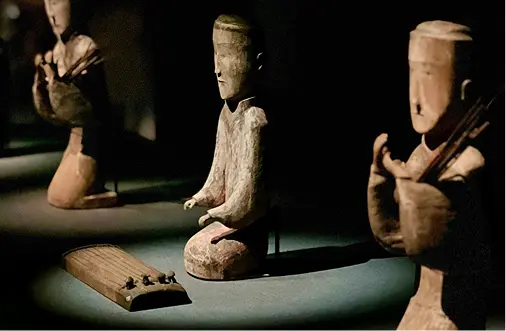
Music was another part of elite life in the Western Han period. Among the objects associated with Mawangdui are wooden musical figures representing performers and instruments. These small figures preserve a moment of performance long after the sound itself has disappeared. Together with other objects from the tomb, they offer a glimpse of a world in which music, ceremony and entertainment formed part of everyday and social life.